
If you’re looking for something to do in Nashville that’s not barhopping, check out the National Museum Of African American Music. The amazing interactive museum was one of the highlights of our trip.
For more help planning your visit to Music City, check out all of our post about Nashville.

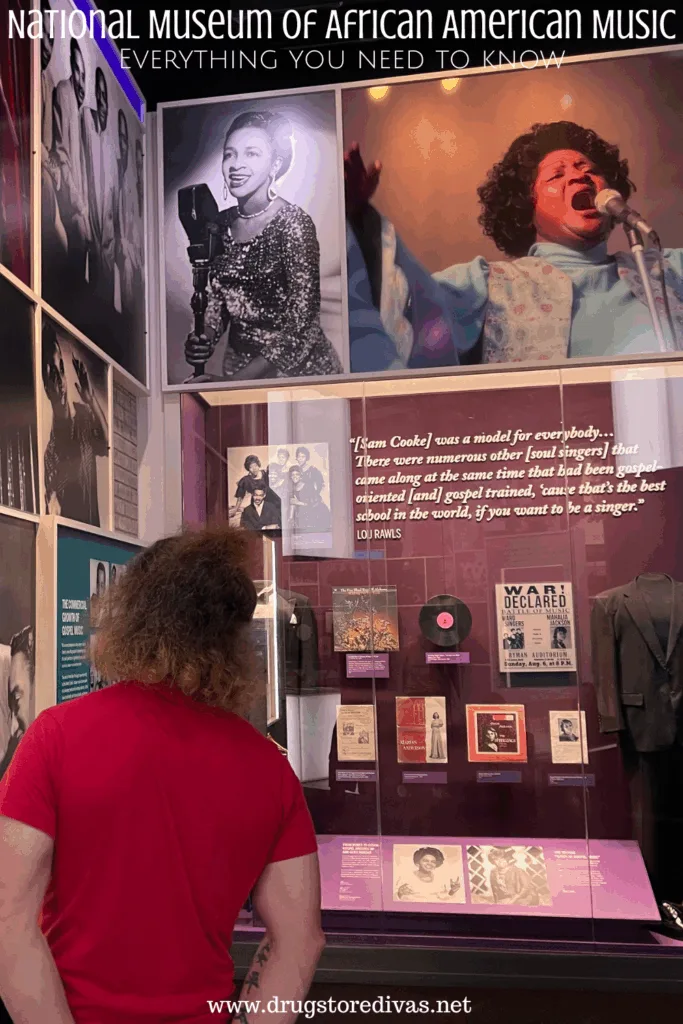
Whenever I’m planning a trip, I always like to look for things to do that are free. That way, we can stretch our budget and spend a little more on food or snacks that we might not have had otherwise.
So, when I was planning our trip to Nashville, I found out that the National Museum of African American Music was free on the first Wednesday of every month.
We happened to be going to Nashville at the end of September into the beginning of October and we were going to be in town the first of the month.
Perfect.
So when I was making our itinerary, I made sure to put the museum on the list for that day.
We figured even if it wasn’t great, it would be free and something to do to kill a little bit of time.
But you guys, the museum is amazing.
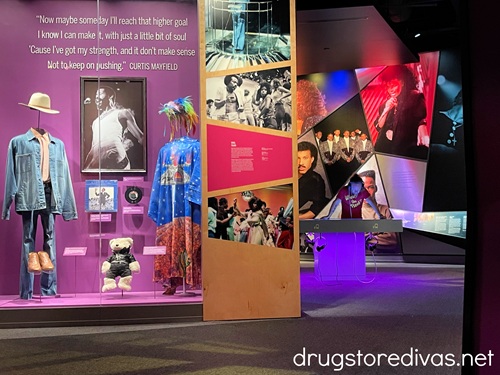
It does such a good job giving you the history of African-American music, starting from its origin in Africa and explaining how it traveled with the enslaved Africans, became incorporated into the culture differently depending on if those people families stayed in the south, moved up north, or traveled out west, and how the music became what it is today.
Each section of the museum also has an interactive portion, which is really fun and engaging. Museums can be stuffy and boring with lots of things to look at and lots of things to read, but not always something to hold your interest. But the NMAAM does a great job of holding your attention with its interactive stations and really interesting information.
The museum is absolutely worth every dollar that it generally charges for admission.
But, if you’re going to be in town on the day it’s free, well, definitely go then.

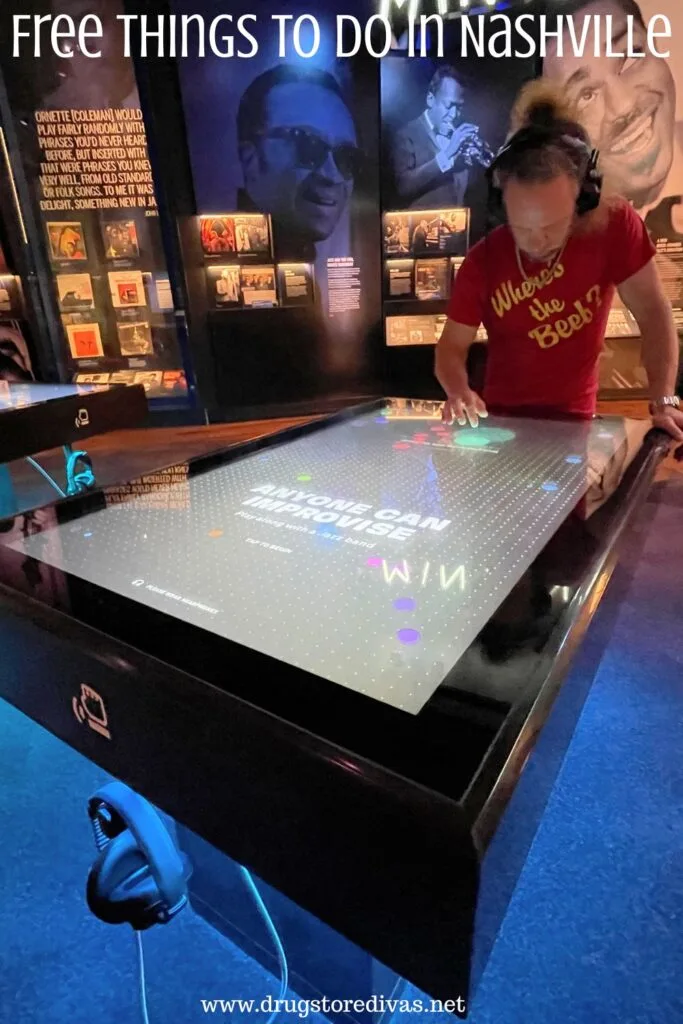
The National Museum of African American Music is free on the first Wednesday of the month. That helped us stretch our travel budget while we were in town.
If you need a little help doing that, check out our list of Free Things To Do In Nashville. It’s filled with ideas, like free Nashville museums, free video games at the best barcade in the area, and more.
National Museum Of African American Music History
Fifth + Broadway is a large mixed-use development, with outdoor shopping and entertainment hubs, that was opened in March 2021.
The North Hall of Assembly Food Hall opened at the same time and the South Hall opened a few months later in June.
Kicking off the opening was the National Museum of African American Music.
The museum broke ground in 2017 and held its ribbon cutting on Martin Luther King Day in 2021.
It was officially opened to the public two weeks later on January 30.

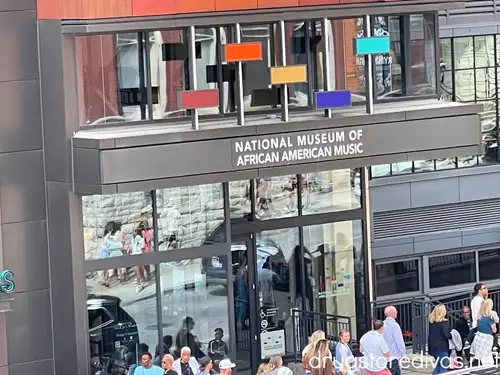
National Museum Of African American Music Review
There are two entrances for the museum. One is on Fifth and the other, you guessed it, is on Broadway.
The Broadway entrance is more of a side entrance where you enter at the back near the bathrooms. The Fifth entrance is more grand because you enter into a large rotunda.
Either way you get to the rotunda to start your tour, but I just like the Fifth entrance, better so I wanted to mention it.
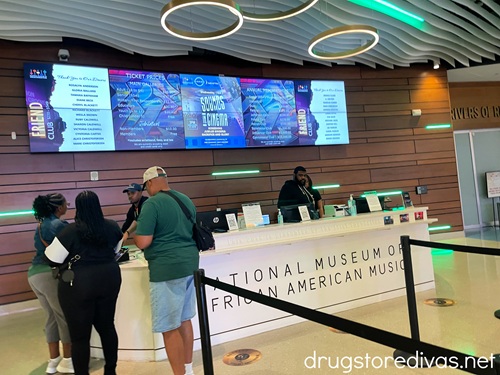
There’s a large desk where you start and pay your admission. It’s there that you can also purchase a wristband, which is included in your ticket price on a regular day but not on free admission day, that you wear throughout the museum and can scan at exhibits to compile a Spotify playlist that you can listen to later.
That’s actually such a great way to take new music home with you.
When we went, I asked if the wristband was necessary. The young man working behind the desk told us we could skip it, and we wouldn’t miss it.
I did appreciate that he saved us five dollars each. Somehow, he must have known that I have had the same 19 songs on my Spotify playlist that I have listened to nonstop for the last decade or so.
Occasionally, I’ll add a new song and delete another, which I did when I added a song that we saw live at the Grand Ole Opry in Nashville, but I think he knew that I just didn’t need another playlist in my life.
I did see a group of women who all paid for the wristband and I do wonder if they listen to the playlist, filled with new-to-them musicians, and reminisce about the museum.
Luckily, for me, I took lots of photos and brought home lots of memories.
Galleries

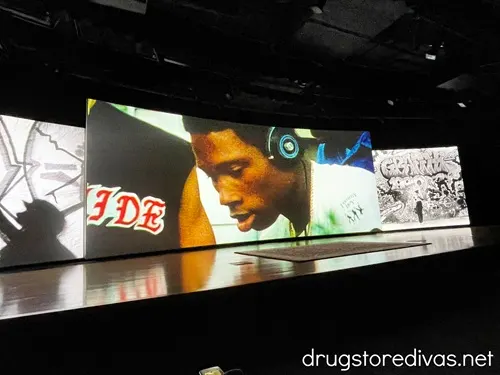
The museum starts at the Roots Theater with a video that gives you a very in depth — and yet somehow brief — history of African-American music, beginning with its origins in Africa up until today.
The film is done so incredibly well. I don’t even have the words to convey how well done it is.
The actual narration was so incredibly interesting to me. It starts with enslaved Africans coming to America and bringing their music with them.
Then, as the history of these people progresses, you see how circumstances led them to the north or the south or out west. And based on these new regions, they adopted new cultures into their music and the music adapted.
What the film does really well is that it carefully transitions from using the words “enslaved Africans” to “African-Americans” when people are referenced. It’s such a conscious language change that was so educational.

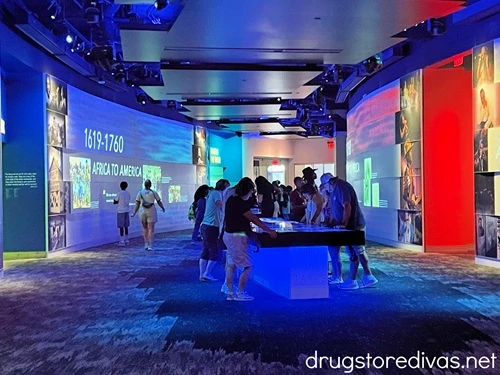
After the film, you exit into the Rivers of Rhythm corridor where an interactive timeline starts your journey.
It’s a large table that walks you through history and the progression of music at your own pace, similar to what you just watched on the video but way more in depth.
You wear a pair of headphones and can push bubbles on the table to starts playing songs from the era. It’s really interactive and engaging.

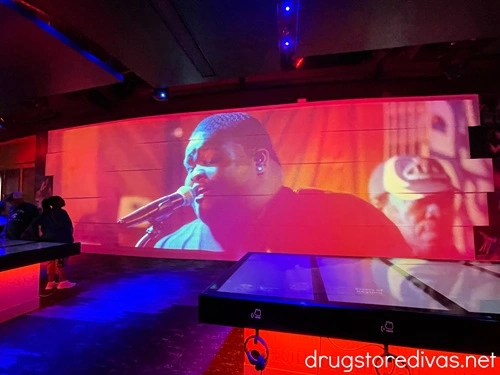
Twice an hour, the table will freeze what you’re doing because a recorded performance by one of three different artists (either Prince, James Brown, or upcoming jazz musician Christone “Kingfish” Ingram) will play on the walls around you.
Wherever visitors are in the museum, they’ll usually pop their heads out to watch the performances on the walls.
The galleries starts with Wade In The Water.
This is probably my favorite section, if I had to choose, because of the interactive portion.
Fun fact: Each gallery has its own interactive portion, some less involved then others. The one in Wade In The Water and in The Message (the hip-hop section) have the best interactive exhibits, in my opinion.
Back to Wade In The Water.

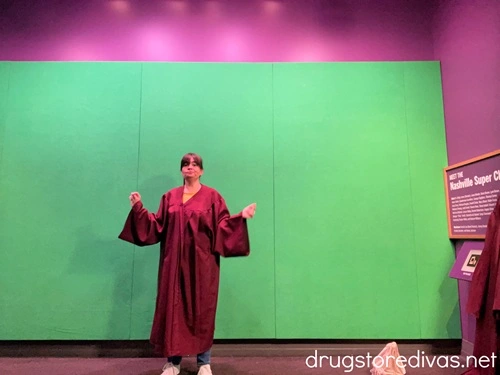
There’s a spot in the gallery where you step into a room with a green screen, put on a church gown, and sing with the choir that’s projected onto a screen in front of you.
You’re lead through the song and taught how to clap to the rhythm.
Or, at least in my case, you try and sing with the bouncing ball that goes across the screen. My rhythm leaves a lot to be desired. But, that doesn’t stop me.

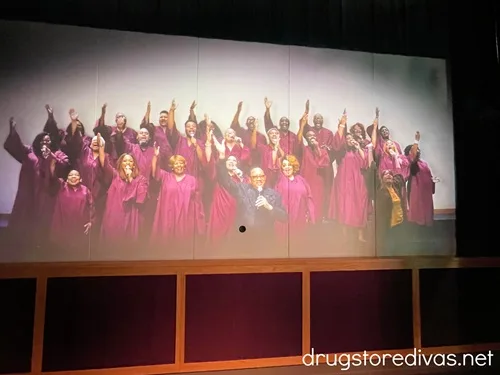
At the end, you’re superimposed into the choir, which is so incredibly fun to watch.
Pete was not sure where I was in the museum and he happened to find me right in time to see my production with the choir.
He laughed so so hard at my lack of rhythm and coordination. It was a lot of fun and a really good memory.

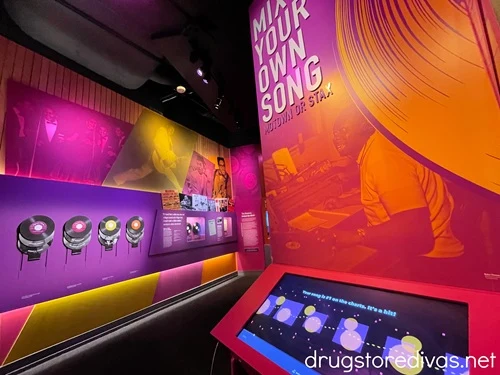
The majority of the other interactive portions are touchscreens, like the Let’s Make a Hit exhibit in the One National Under A Groove gallery.
You get a demo track and like a producer, choosing different beats, instruments, and more to create a song.
After you put musical components together, the screen tells you your style. Mine was Motown, which I thought was based on the genre (which was cool because I like the motown groove), but it’s actually based on R&B studios rather than musical genres.

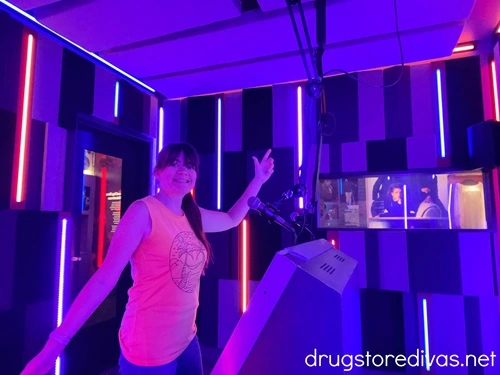
The most popular interactive exhibit, according to the docent we spoke to, is the rap studio in The Message.
You go in a room and you’re able to have a rap battle with a friend or try to rap with The Fugees.
I remember getting The Fugees CD and my youngest brother was really young, but I got him hooked on it. It was his favorite for so long.
But, even though I have listened to Killing Me Softly more times than I can even count, I cannot win a rap battle with that song. But it was fun to try.

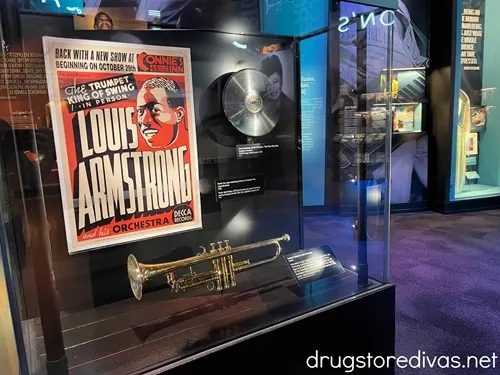
Pete’s favorite section was Crossroads, which is all about blues music, arguably his favorite genre.
And then, just to make sure I mentioned every gallery, there’s also A Love Supreme, which is all about jazz, and has a huge touch table where you can play along with a jazz band.
You drag your finger across the table to play notes and riff. It encourages you to be really expressive, which I thought was cool.
We spent so much time at the museum, way more than we anticipated, and we didn’t even check out the feature gallery. When we were in Nashville, the exhibit was a traveling exhibit about the Fisk Jubilee Singers, an African-American a cappella ensemble that was started by students at Fisk University — in Nashville.
I’m not sure if that feature gallery is always Nashville-related or if that was just a coincidence.
Visitor Tips:
Just a couple quick tips, if you’re going.
Wear comfortable shoes. The museum is gonna take you a while, and you’re standing on your feet most of the time. Plus, there’s a dance floor in one of the galleries. So comfortable shoes are a must.
Also, it’s wheelchair accessible. Elevators and ramps are located throughout the museum. And it’s stroller friendly too (just don’t leave the strollers unattended). Personally, I think kids will love the interactive galleries and will learn a lot at the museum, so definitely take them.
And finally, photography is allowed and encouraged. If you do take photos, the museum asks that you tag it on social media.
National Museum of African American Music: Frequently Asked Questions
510 Broadway; Nashville, TN
Tuesday to Saturday: 10 am to 5 pm; Sunday and Monday: noon to 5 pm
Tickets are $35 for adults (18 to 64), $32.90 for seniors (65+) and military/first responders, and $30.80 for youth (5 to 17) and educators. Kids under $5 are free.
The feature gallery is $10 for non-members and free for members.
The NMAAM is free on the first Wednesday of every month, courtesy of Nissan.
*Prices are updated as of our visit in October 2025.
The museum doesn’t have its own parking lot, but parking is available at the nearby Fifth + Broadway garage (598B Broadway), which is a paid public lot.
You can parking discount rate of $22 for up to 12 hours when you get stop at the validation kiosk in the museum lobby. Otherwise, parking at that lot is $10 for the first hour and increases from there.
I took a photo on the way in and way out of the museum, coincidentally. We entered at 10:54 am and left at 1:14 pm, so we were there for a solid 2 hours and 20 minutes.
And, like I said, we didn’t even see the featured gallery.
You could go through it faster, if you needed to, but we took our time.

What To Do Around The National Museum Of African American Music:
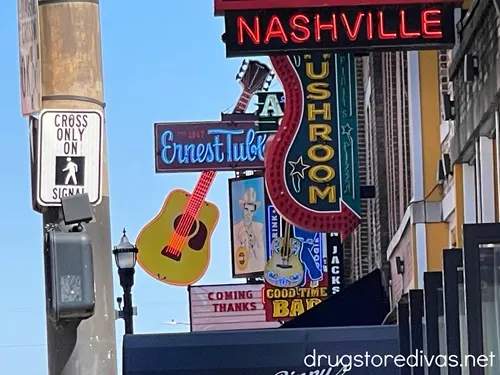
The museum is located on Broadway, which is home some of the best bars in Nashville, like Robert’s Western World and Toosie’s Orchid Lounge. Definitely check out some live music there.
And, since you’re at Fifth + Broadway, you should eat at Hattie B’s Hot Chicken. It’s my favorite hot chicken sandwich ever, and you can’t get it outside of Nashville, so don’t miss it.
This is all in the downtown area. Since you’re gonna be around there, our 24 Hours In Downtown Nashville post can help you plan out the rest of your day.
Have you been to the National Museum Of African American Music? Let us know your thoughts in the comments.
Jennifer Wise
Monday 26th of January 2026
This sounds REALLY amazing!