
Every time I go to Japan, I eat as much as I can of all the foods I can’t get in America. If you’re visiting and wondering what to eat, our list of the must-try Japanese foods (the ones I eat every time I visit Japan) will help.
For more help planning your trip, check out all of our posts about Japan.

I have family in Japan, so we try to visit as often as we can. My grandma was one of eight children, and the only one to move to America.
Every time I’m there, I spend as much time as I can eating. Even when we stay with a relative or rent an Airbnb with a kitchen, I still go out for every meal.
I cook almost every meal at home in general, but when I’m in Japan, I just want to go into all the local restaurants and stop by all the street vendors to eat everything I can’t easily get at home.
If you’re planning a trip to Japan and don’t know what you should eat, our list will help.
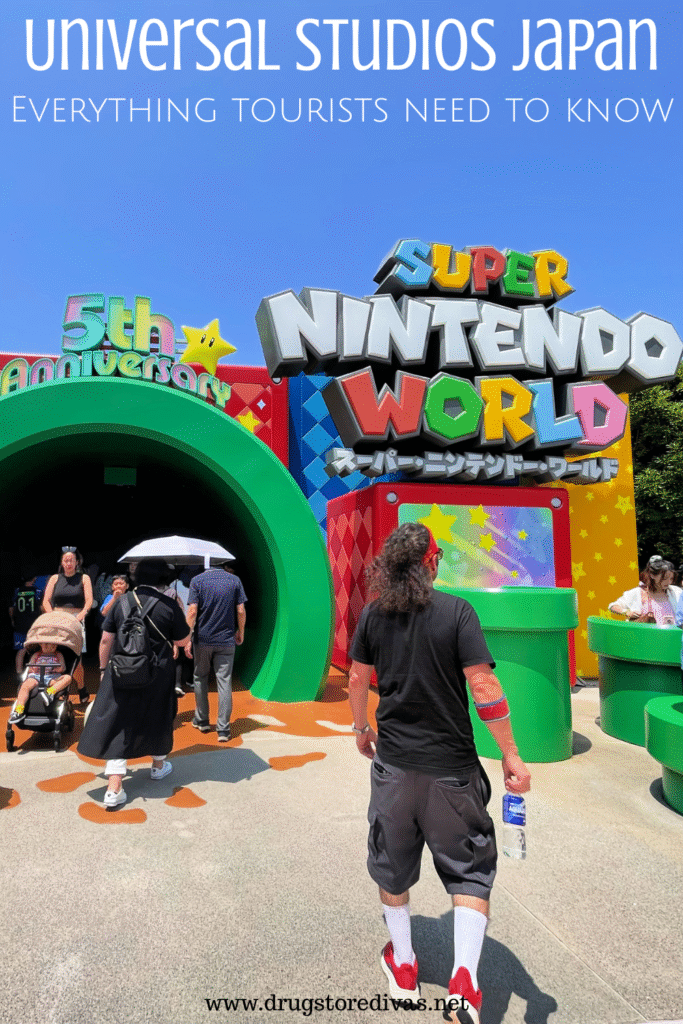
If you’re visiting Japan, you might be looking for things to do also. If you’re planning on a theme park, our Universal Studios Japan review is a good post to check out.
Foods To Try When You Visit Japan
Affiliate links are included in this post and Drugstore Divas may make a small commission if you use them.
This list really isn’t in any order, except for the number one spot because gyoza is my favorite thing to eat in Japan.
I tried to pick foods that aren’t easily available in the United States. Most of the must-try street food in Japan isn’t as easily accessible here.
Also, keep in mind that these are the foods I crave and make sure to eat every time I’m in Japan. This isn’t a full guide of every food that’s served in Japan.
Meals & Restaurant Favorites
Gyoza
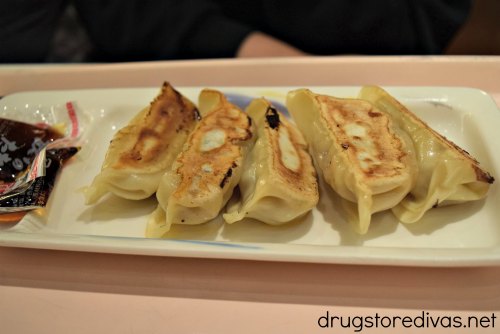
Once a month or so, I have a dream that I’m in an airport, leaving Japan. And I’m crying, “I can’t leave yet; I didn’t eat enough gyoza.” So, every time I go to Japan, I make sure to eat gyoza until I’m stuffed with it. My most recent trip, I had gyoza from three different restaurants on my last night.
Gyoza is a Japanese version of a Chinese dumpling. Gyoza has a thin skin, is usually filled with pork and vegetables, pan fried, then served with a soy sauce and rice vinegar dipping sauce. It’s the perfect appetizer to ramen, or a side dish for yakimeshi (fried rice).
My absolute favorite comes from Gyoza no OHSHO, a popular chain restaurant with almost 700 locations across Japan. The filling is ground pork, cabbage, and a healthy amount of garlic. Also keep your eyes out for wagyu gyoza, which is getting popular. It’s a different flavor profile and really delicious.
Yakimeshi
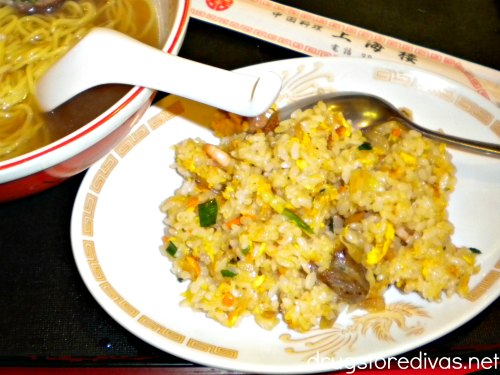
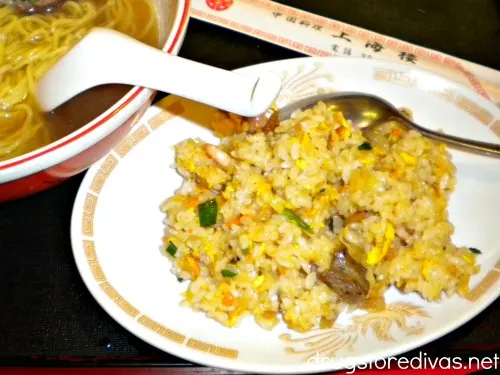
Yakimeshi is Chinese fried rice (known as chahan in China and yakimeshi in Japan) that is made in a Japanese style.
It’s not the fried rice you get at Chinese food restaurants in America. There are no square carrots and no yellow rice. Yakimeshi is basically white rice (I toss a splash of soy sauce into mine for flavor) made from Japanese sticky rice, pan-fried with chunks of pork, pieces of egg, and green onion.
Try my yakimeshi recipe. I also have a recipe for kani yakimeshi (yakimeshi with imitation crab) too.
Ramen
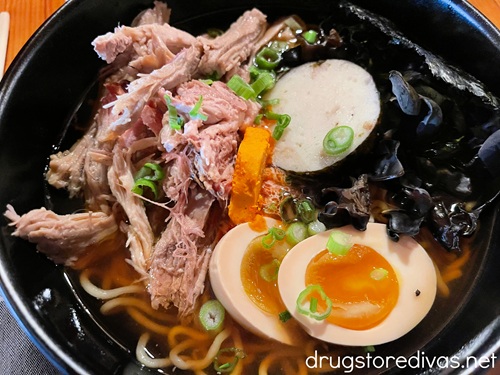
If you’re gonna go to Japan, you’re gonna need to get ramen at least once. Even in the summer.
There are four main seasoning bases (tare): shoyu (soy sauce), shio (salt), miso (fermented soybean paste), and tonkotsu (pork). Tonkotsu is my favorite. In my opinion, it has the most flavor.
I love adding a soft-boiled egg to mine, although that’s an add on, not standard in Japanese ramen.
Also, quick note: If you’re in Japan and looking for ramen, you might see it called “chuka soba”. That’s the traditional name for Japanese ramen, not to be confused with soba noodles, which are usually served cold.
Okonomiyaki
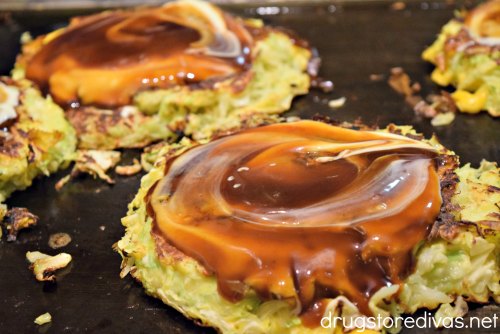
Okonomiyaki is a savory Japanese cabbage pancake, made from okonomiyaki flour, cabbage, scallions, and fresh pork strips (that look like bacon), served with a sauce similar to BBQ sauce and mayo on top. The fun of okonomiyaki is you often make it yourself, on a hibachi grill at your table, so you can add as much or as little of each ingredient you like.
That’s literally its name. Yaki means grilled. Okonomi means “how you like”, so okonomiyaki is literally: grilled how you like.
If you don’t know how you would like it, just go to a restaurant that serves it. They’ll make it for you and it’ll be delicious.
If you want to make it at home, try my mini okonomiyaki with shrimp recipe.
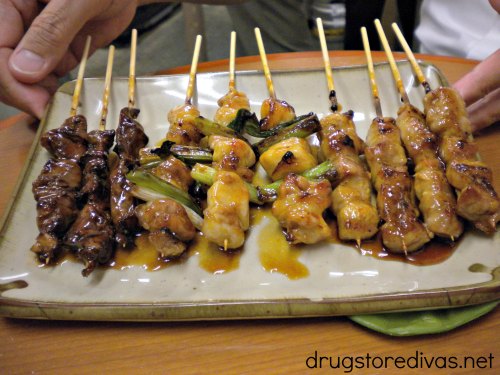

Yakitori
In Japanese, yaki means grilled and tori means chicken. So yakitori is grilled chicken. But it’s so much more than that. There are restaurants called “Yakitori Houses” in Japan and you can’t make an entire restaurant out of grilled chicken.
Except you can.
Yakitori is basically chicken on a stick, grilled to perfection. I make it at home with white meat chicken because that’s my preference. But you can get dark meat, chicken skin, chicken liver (which is the most popular), chicken cartilage, and more all skewered and grilled.
You can go to a restaurant for it, order it at an izakaya, or get it as a street food.
Try my yakitori recipe.
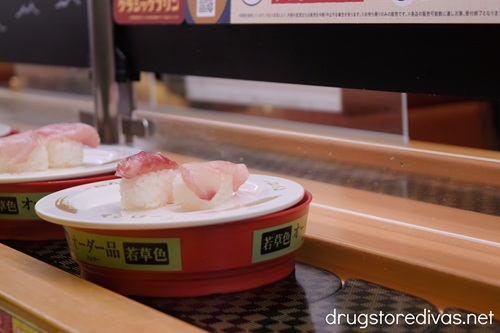
Conveyor Belt Sushi
I don’t love sushi, but I love going to conveyor belt sushi. The most popular one in Japan is probably Sushiro, but you can find a ton all over now.
Yes, you’re going for fresh, delicious sushi, but you’re going more for the experience. Sitting at a table, watching sushi roll by on a belt, is so much fun.
If you don’t like sushi, you should still go because most sushi-go-round restaurants serve other foods, like noodles and tempura. We’ve had mozzarella tempura and hamburger sushi there, so there really is something for everyone.
Plus, in some of the restaurants, each plate you eat enters you for a chance to win a prize. And who doesn’t love winning?
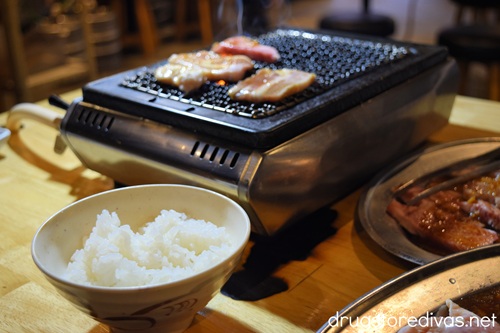
Yakiniku
I was so excited to take Pete to yakiniku on our most recent trip because he loves wagyu and he had never been before.
Yaki means grilled and niku means meat, so it translates to grilled meat. Which exactly explains the experience, but it doesn’t.
You sit at a table with a yakitori grill on it and order raw meat and vegetables that are brought to your table. You then grill them to your liking and enjoy them. It’s so much fun.
Many yakiniku restaurants offer an all-you-can-eat option, which is a great deal if you can eat a lot. They also allow you to add on all-you-can-drink lemon sours, which you pour straight at your table yourself, so it’s a really fun experience.
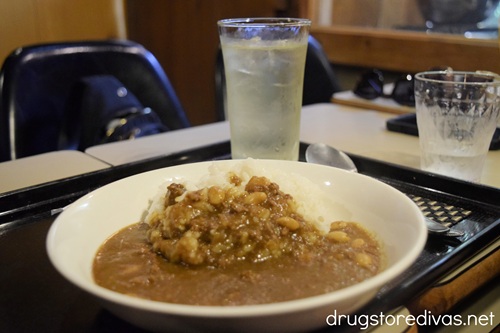
Curry
I love Japanese curry. Its flavor profile is so different from an Indian curry. It has a thick, stew-like broth and isn’t filled with spices like an Indian curry.
You can buy instant Japanese curry packets in the grocery stores in America, if you want to try it at home. But, if you’re in Japan and see it on a menu, definitely order it.
On our last trip, we had a version with ground meat and beans at a cafe in a 120 year old building in Nakazakicho that survived the bombing of WWII that was really impressive (only slightly less impressive than the building’s history).
If you want to make this at home, try our slow cooker Japanese chicken curry recipe.
Street Food & Festival Snacks
Takoyaki
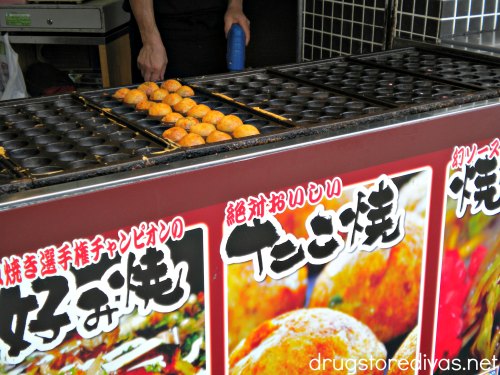
Takoyaki is not for me, but almost everyone in my family loves it. So this list would have a huge hole in it if I left it out.
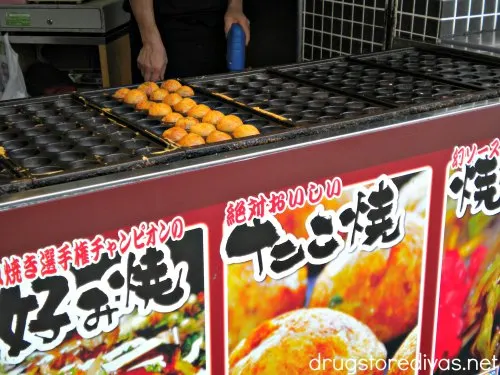
As you know by now, yaki means grilled. Tako, well, is octopus. So this is grilled octopus, but takoyaki is a piece of octopus in the center of a dough ball that’s cooked on a giant cast iron skillet with divots in it.
Even if you don’t eat it, find a takoyaki stand and watch it being made. It’s really impressive.
Yakisoba
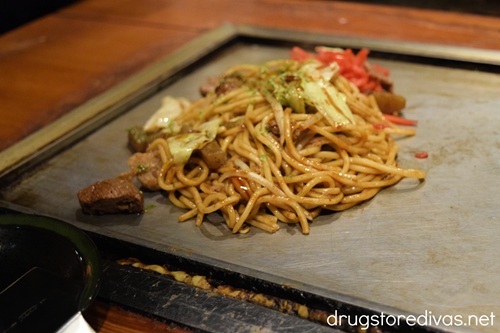
Yakisoba, which is pan-fried soba noodles in a dark sauce, is so good if you order it in Japan. I had it twice this last trip, once at an okonomiyaki restaurant so it was served to me on a hibachi grill I sat behind and once at a small izakaya that served it to me on the hottest sizzle plate I’ve ever seen.
The flavor of the piping hot yakisoba is so craveable.
I’ve had yakisoba in the US a bunch of times and it’s just not served as hot as it is in Japan. So it’s a little lackluster. If you’ve had it in the US and thought the same thing, give it a second try in Japan. I think you’ll have a different experience.
Taiyaki
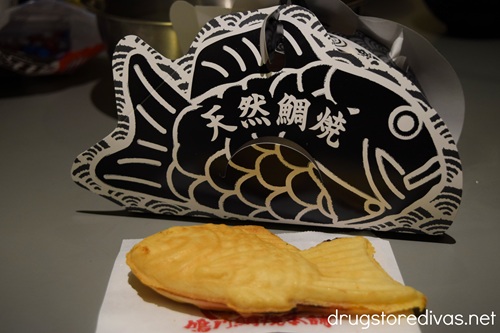
Taiyaki is a fish-shaped pastry, made of a dough that’s similar to a waffle batter, that’s usually filled with either red bean paste or custard. I’ve seen it sold at stalls filled with sweet potato too. I did get a packaged version from a grocery store that was filled with lemon curd, which was outstanding.
It’s best eaten warm, so look for them at a street vendor that has space nearby where you can eat it (since in Japan, you’re not supposed to eat and walk). If you do have to take it home, you can heat it in the microwave to get a similar experience.


Bebi Kasutera
Bebi Kasutera, also called Baby Castella, are one of those things that I need in my life every time I go to Japan. My heart is not happy until I have a bag of these in my hands.
You mostly find them at yomise (a Japanese street fair), but they can sometimes be found on large shopping streets too. And my last trip, I found some at Katsuo-ji Temple.
These tiny dough balls are made in a long cast iron pan. Dough, which tastes very similar to a sweet pancake dough, is poured into cavities, then the top of the pan is closed. The dough cooks, leaving a crisp outside and a soft inside, like a doughnut.
Many are shaped as Japanese cartoon characters, like Anpanman, but plain oval shapes are more common.
Tanghulu
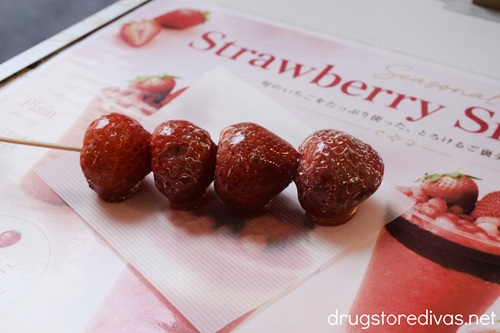
I don’t know why candied fruit isn’t everywhere. It’s amazing and delicious and one of my favorite things to eat.
Tanghulu, as this candied fruit is called, are a Chinese street treat that’s been made since 960 AD. But I’ve only ever seen them in Japan. And whenever I see the strawberry version (which is the best version), I eat it.
Tanghulu has the perfect ratio of candy coating to fruit, plus you can enjoy it all as one, incredible, dream-creating bite.
Convenience Store Must-Tries
Korokke
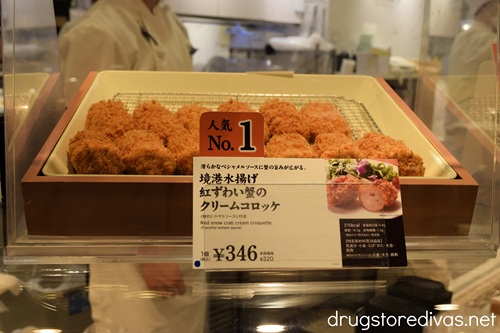
Let me talk to you about Japanese convenience stores for a minute. They’re amazing. The food you can get there is top notch, so much better than the meat on rollers in the US.
There’s hot food that they actually will prepare for you, cheap but fresh packaged meals, and lots of snacks. So, when I’m out and hungry, I stop in a convenience store for korokke, which are Japanese potato and meat croquettes.
Korokke are mashed potatoes, usually mixed with some sort of ground meat, formed into a patty, covered in panko, then deep-fried. My favorite version is beef and potato, but I tried a crab and cream cheese version from a stand in the basement of Takashimaya this trip, and it was really good too.
Egg Sandwich
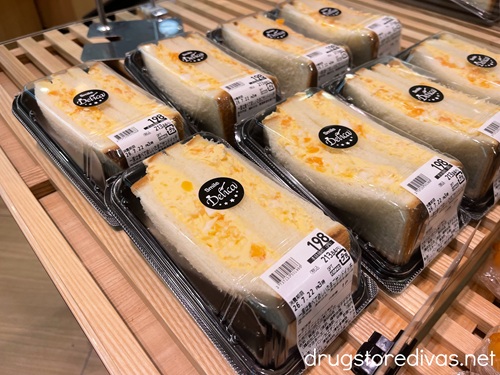
I lost count of how many egg sandwiches Pete and I ate this trip. They’re so good and so cheap at the convenience stores.
Hard-boiled eggs are treated so carefully as the whites are mixed with Kewpie mayo and a dash of sugar before the yolks are chopped in. That’s placed between two pieces of crustless milk bread to give you the fluffiest, most satisfying sandwich.
And guys. Don’t sleep on that milk bread. It’s the thickest, fluffiest, most delicious white bread you’ll ever eat.
UCC Coffee
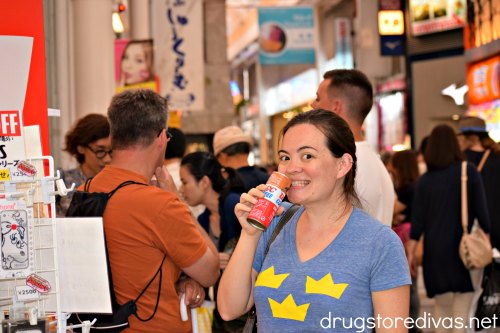
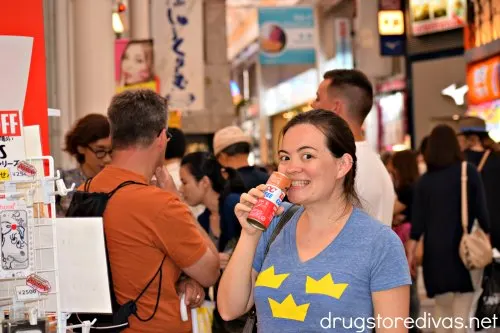
When you walk around Japan, there are vending machines everywhere. Even in the most remote areas, you’ll find a drink vending machine. It’s hot in Japan too, so you stop at those machines often — and I always get a can of UCC Coffee.
UCC Coffee is canned cold coffee. Not cold brew, like we have now in the US, because it has milk added. And it’s not iced because there’s no ice. It’s coffee, sweetened with milk and sugar, and then served cold. It’s amazing.
There are so many cold coffee brands in Japan now, like Boss, Fire, and Georgia. Asahi is even in the game with Wonda coffee. But UCC Coffee with Milk is the OG, the world’s first canned coffee beverage, which was created in 1969. It’s my absolute favorite (even though they did make the cans smaller between my last two Japan trips).
Fruit Sandwich
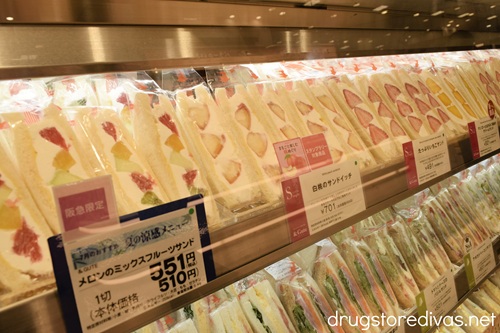
I’m not gonna say the saddest part about leaving Japan is not being able to get a fruit sandwich every day, but it’s pretty close. That was my go-to breakfast sandwich on my most recent trip.
It’s fruit and whipped cream between two crustless slices of milk bread, and it’s as delicious as it sounds. Somehow, it sounds like dessert but is perfectly suitable for breakfast.
Different versions are made with different fruit, but all of them are really great.
Snacks to Bring Home
Koara no Māchi
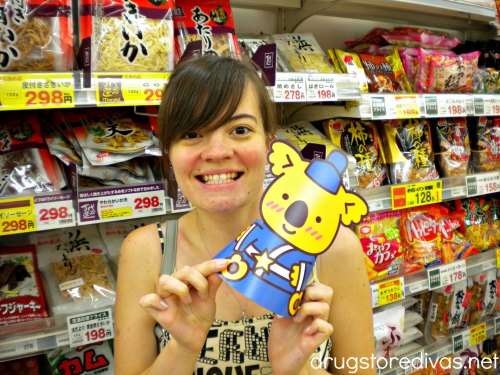
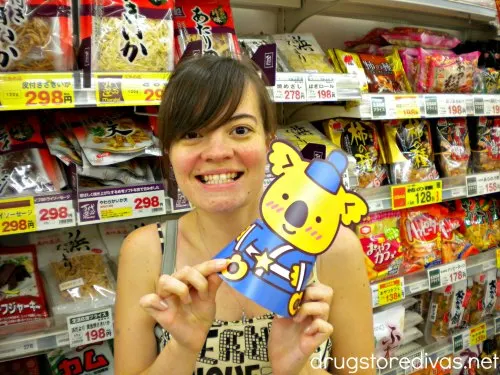
Koara no Māchi are my favorite Japanese treat. They’re thin biscuits, shaped like koalas, filled with chocolate. The first time I was in Japan, I bought a box of them every single day. I was 17 and it was the best way to spend my disposable income.
You can get Koara no Māchi in the United States. They’re called Koala’s March here, and they have the same chocolate and strawberry versions you can get in Japan.
But, in Japan, there are also a ton of varieties you can’t find here, like the limited-edition Fantasy Soda version I found in Daiso this time. Those are purple cookie shells filled with blue soda-flavored chocolate and are as pretty as can be.
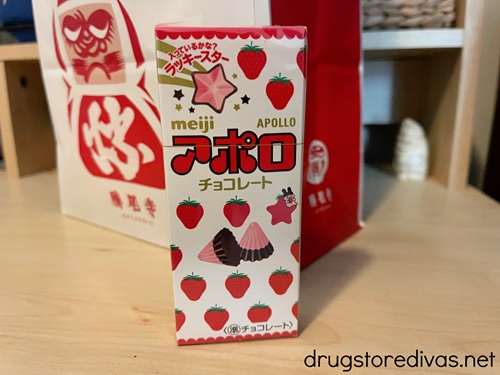
Meiji Apollo Strawberry Chocolate
If you like the combination of chocolate and strawberry, you need to find some Meiji Apollo Strawberry Chocolates to take home. You can find them in small packages, but grocery stores also have larger bags.
They’re shaped super cute too. Most people (myself included) think they’re shaped like mountains, maybe Mount Fuji, but they’re supposed to be shaped like rockets after the Apollo space capsule.
Which makes sense if you know the name of these (which, no one really does).
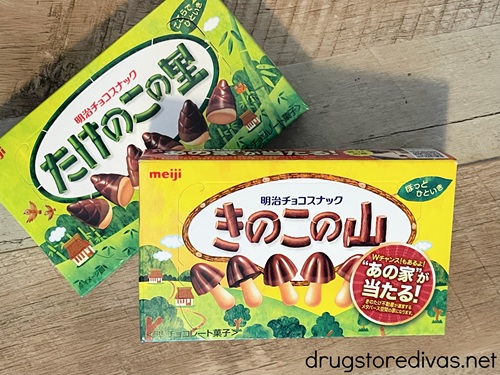
Kinoko no Yama
There’s a huge debate in Japan. Are you Team Mushroom (Kinoko no Yama) or Team Bamboo Shoot (Takenoko no Sato). It’s a choice people in Japan take very seriously.
Personally, I’m Team Mushroom. The texture of the biscuit that’s the mushroom base is so good. The texture of the bamboo shoot is a little too hard. Although if someone offers me one, I’m not saying no.
I bring a box of each of them home with me after every trip, just because I can, but the mushrooms are what I’m always on the hunt for when I’m there.
Which of these foods do you crave when you’re not in Japan? Be sure to let us know in the comments.