
If you’ve been to a konbini in Japan, there’s a very good chance you’ve had a tamago sando, a classic Japanese egg sandwich. If you want to have it at home, follow this recipe.
For more ideas of what to make, check out all of our recipes.
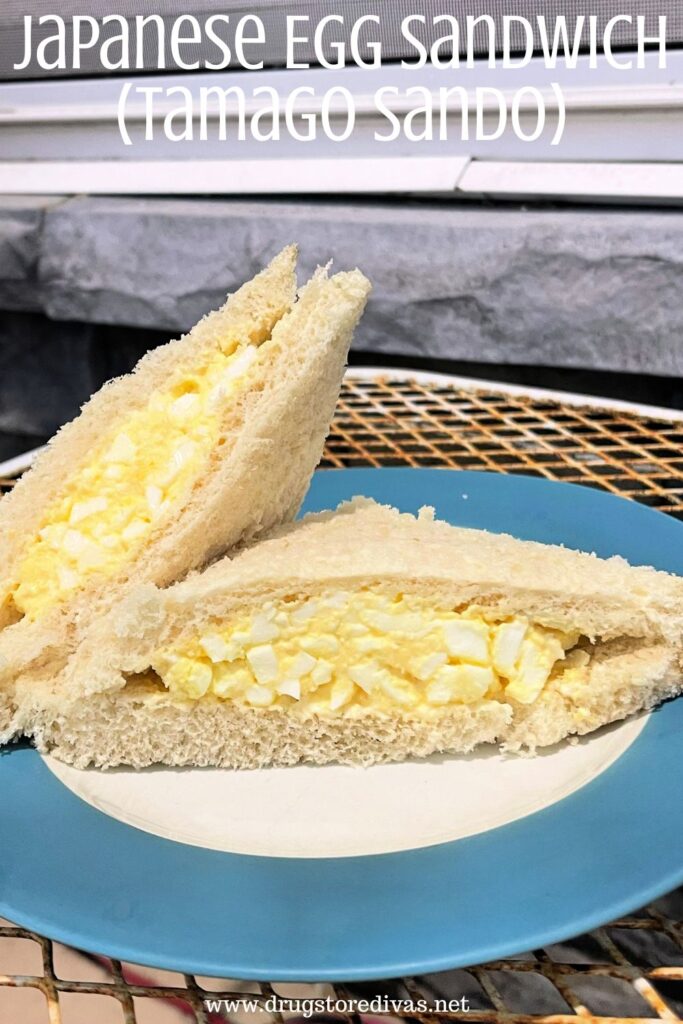
One of the things I miss most about visiting Japan is having a tamago sando for breakfast every morning. I would take a quick walk to either the closest konbini, which is a Japanese convenience store, or the grocery store to pick one up.
It’s a slightly less creamy egg mixture between two slices of Japanese milk bread.
Quick aside: tamago means egg and sando is the Japanese way to shorten the word sandwich, so a tamago sando is simply, by definition, an egg sandwich.
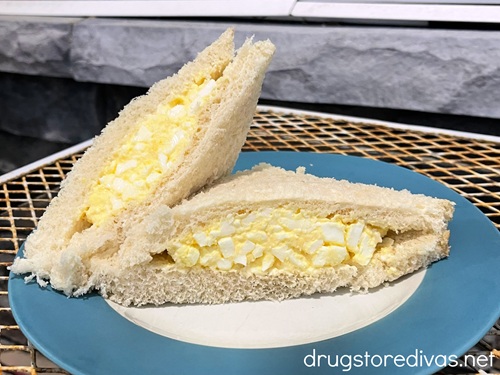
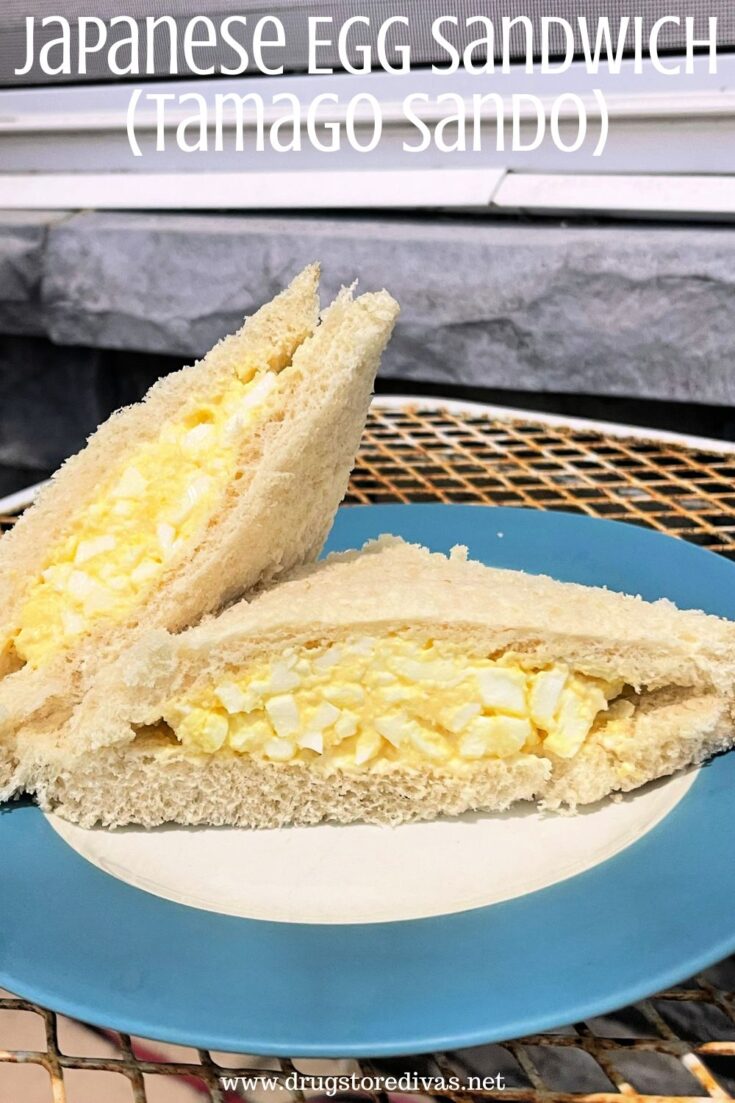
It always has the crust cut off, it’s cut into triangles, and the majority of the egg salad mixture is concentrated in the middle of the sandwich.
Tamago sandos have such a pillowy soft bite that’s unlike the texture of American egg salad sandwiches.
So, once I nailed the recipe for a shokupan (Japanese milk bread), I was able to make the perfect tamago sando.
If you don’t make your own Japanese bread (which I also did not do until a few months ago), and you don’t have access to an Asian market that sells it, you can make this on regular white bread. It’ll be a little less fluffy because American white bread is denser and slices are thinner, but it’ll still be delicious.

This is just one of the Japanese foods that I cook at home. That’s a lot cheaper than flight to Japan when I want to eat these.
So, if you want to make more, check out our list of Japanese recipes you can make at home. There are recipes for starters, sides, main meals, and more.
Tamago Sando (Japanese egg sandwich) recipe
Affiliate links are included in this post and Drugstore Divas may make a small commission if you use them.
Tamago Sando Ingredients:
You can get the full list of ingredients with measurements in the recipe card below.
- Eggs – We use regular large eggs from the grocery store.
- Salt – Salt helps to bring out the flavor of the other ingredients.
- Mayonnaise – We use Kewpie mayo. That’s a Japanese mayonnaise that’s sweeter than traditional American mayo. It only uses egg yolk (not yolk and whites like American mayo), giving it a creamier texture.
- Heavy cream – We add this to give a creaminess to the egg mixture. If you don’t want to buy any just for this recipe, because it does use such a small amount, you can just add more mayo.
- Sugar – A little bit of sugar gives the sweetness that you usually get from a tamago sando.
- Milk bread – This is Japanese white bread. If you can’t find it, you can use American white bread.
How To Make Tamago Sandos:
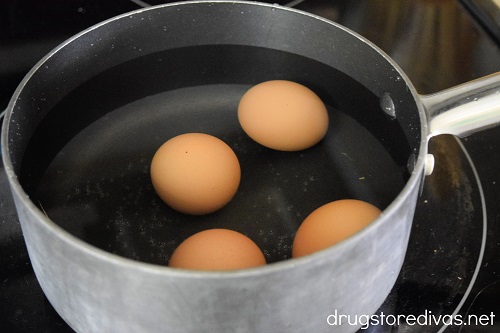
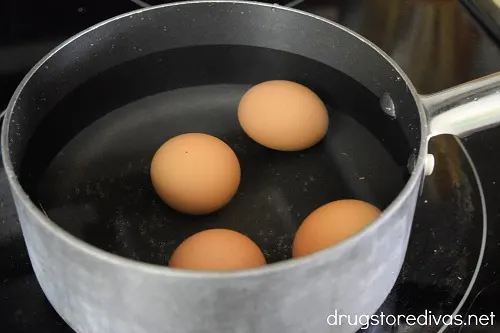
Hard boil the eggs.
You can do this anyway that you like. I have a full post on my foolproof method to hard boil eggs. But, quick summary: put cold eggs in cold water that fills a pot just above the egg. Put the lid on. Put it on the stove and turn the heat up to high. Set a timer for 16 minutes. When the timer is done, you have a perfect egg.
Put the eggs in a bowl of cold water and ice.
This will help to pull the eggs cool down and make it easier for you to peel off the shell.
I prefer eating this cold since that’s how you get it from the grocery store in Japan, so you do want to cool your eggs down before making your egg salad.
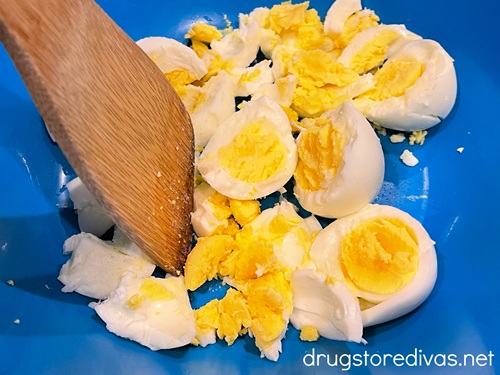
Peel the eggs and put them into a large bowl.
With a bamboo spoon, break the eggs apart until the yolk is slightly mashed and the whites are a uniform size.
I’ve seen other versions of this recipe where just the whites are mashed and the yolk is folded in later. Personally, I think that leads to a drier sandwich, so that’s not the way I prefer to make it.
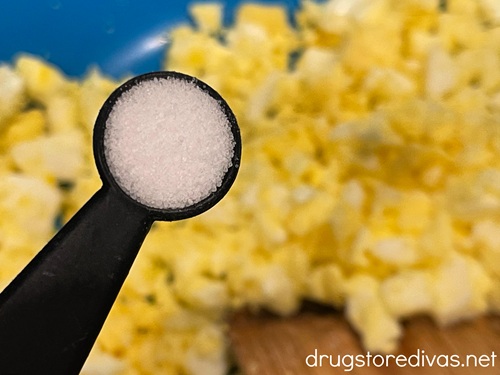
Add in the salt.
Add in the Kewpie mayo.
Kewpie mayo is better than American mayonnaise for this recipe because it’s creamer and a little sweeter. If you don’t want to buy it, you can use regular mayo, but it’ll taste more like an American egg salad sandwich than a Japanese one.
Add in the heavy cream.
If you don’t have heavy cream handy, and you don’t wanna buy a whole carton for this recipe, that’s fine. Just add another tablespoon of mayo instead.
Add in the sugar.
I know we’re all being conscious of our sugar lately. Me too. I look at the nutritional facts of things before I buy them. But, with that being said, this recipe benefits from this tiny bit of sugar so much, so don’t skip it.
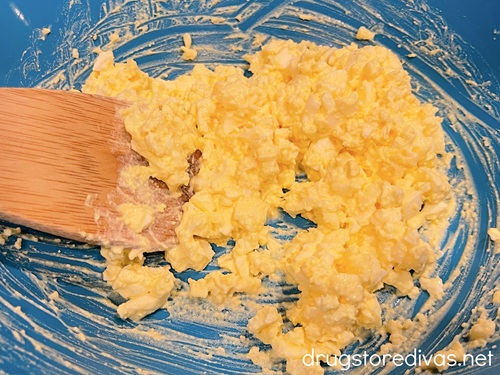
Stir everything together until the yolks become really creamy.
You don’t just wanna stir until everything is incorporated. You wanna stir for just a little bit longer than that to really make sure the yolk is the right consistency.
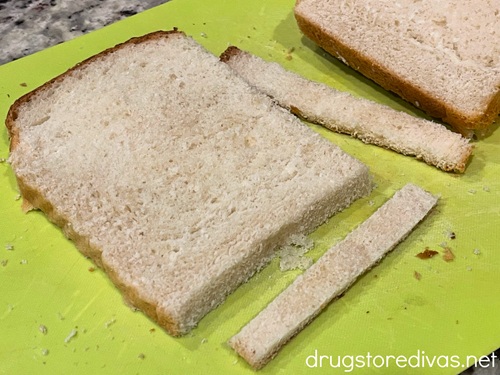
Slice two slices of Japanese white bread per sandwich.
Again, if you don’t have this, or you don’t have access to it, you can just use traditional white bread.
Cut off the crust.
So, small aside. Japan didn’t have sandwiches until the Europeans brought them over. And the way that the Japanese people were introduced to sandwiches were tea sandwiches, which are those smaller sandwiches that always have the crust removed. So, when you get a Japanese sandwich, like this tamago sando or a fruit sando, you’ll get it served without crust.
Don’t throw the crust away, though. Even though I don’t serve them with this sandwich, I save them to make homemade breadcrumbs.
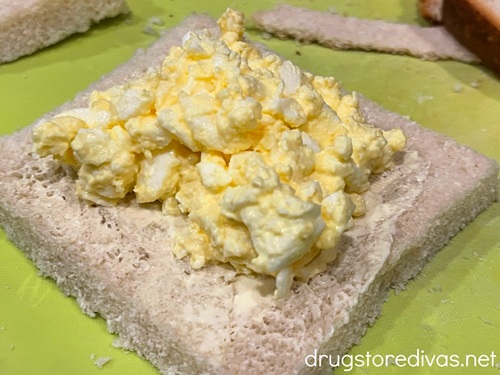
Lightly butter two pieces of bread.
The butter acts like a barrier so that the bread doesn’t get soggy when the egg salad is added to it. It’s actually a brilliant hack. Softened butter works so much better than cold butter.
Add about a third of the egg salad mixture to the center of the bread.
It doesn’t have to be exactly in the center, but you wanna concentrate it in the center, so it’s easier if it starts there.
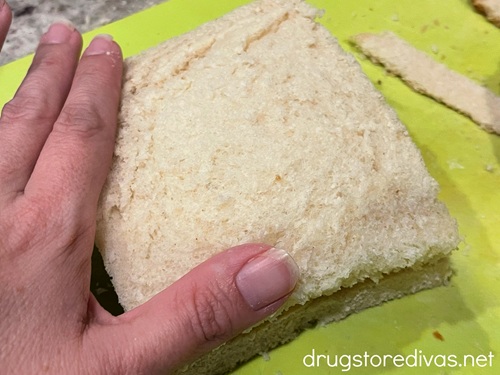
Push down around the edges to seal them and trap the egg salad in the middle of the sandwich.
Flip the bread over and do the same thing to the slice on the other side.
If you’ve gotten these sandwiches in Japan, you know that the mixture is larger in the center than anywhere else, so this is a hack to do that.
If you’ve never had these in Japan, and you’re going more for flavor than visually looking like the sandwich, you can skip this part. But don’t be surprised if you go grocery store and see the sandwiches this way.
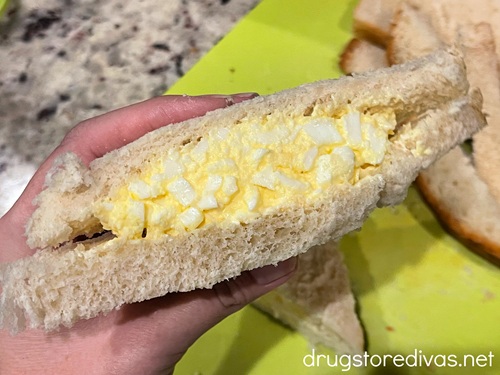
Cut the sandwich into two triangles.
The triangles will accentuate the large dollop of egg salad inside.
Again, this is what they do in the grocery stores and convenience stores in Japan, so if you want to be authentic, cut it this way.
If you don’t care, you can cut the sandwich any way you want. You can also skip cutting it in half. Whatever you want.
Tamago Sando: Frequently Asked Questions
You can make the egg salad mixture ahead of time and store it in an airtight container in the fridge for about four days.
If you want to assemble the sandwich ahead of time, the small layer of butter really does help the bread to not get soggy. So, you could make this the night before if you were leaving early the next morning, but we really suggest making them as close to serving as possible.
Traditionally, tamago sandos use shokupan (Japanese milk bread). It’s part of why the sandwiches are so fluffy and taste like eating a cloud.
I do make that bread at home and it takes me four hours from start to finish, plus it requires a Pullman loaf pan.
So, you could just use traditional white bread. We haven’t tried it on wheat bread or multigrain bread because I think the strong flavors of that bread would take away from the light taste of the egg salad. But, this is your sandwich so make it however you prefer.
Buttering the bread prevents your sandwich from getting soggy. If you skip the thin layer of butter, your egg salad will end up softening your already soft bread, making your whole sandwich soggy.
No. You don’t want to toast the bread for tamago sandos. It’s traditionally eaten on bread, not toast.
To keep it traditional, you should cut the crust. But, you don’t have to. It tastes just fine if you leave it.
What’s The Difference Between A Tamago Sando And American Egg Salad?
There are a few differences between the two. Tamago sandos have a creamier egg mixture that’s sweetened because of sugar and Kewpie mayo and are served on a softer bread with the crusts removed.
Unlike American egg salad sandwiches, which can add onions and celery, tamago sandos don’t add anything for texture.
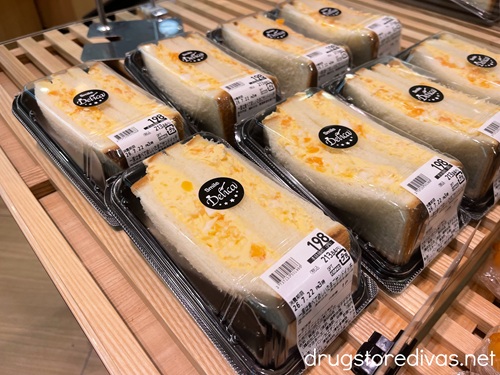
Japanese eggs often have a more orange yolk, similar to American farm eggs, so the egg sandwiches in Japan have a yellow and orange color.

More Egg Salad Recipes:
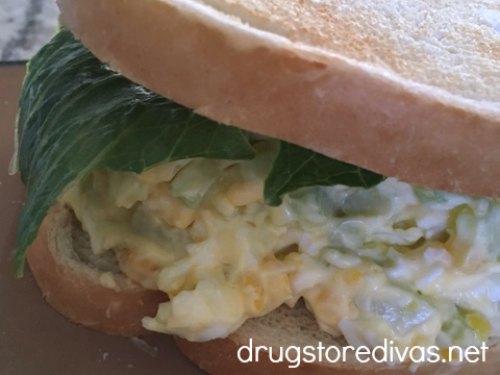
If you would rather make an American egg salad sandwich, we have a post for that. Check out our egg salad sandwich recipe instead.
Japanese Egg Sandwich (Tamago Sando)
If you’ve been to a konbini in Japan, there's a very good chance you’ve had a tamago sando, a classic Japanese egg sandwich. If you want to have it at home, follow this recipe.
Ingredients
- 4 large eggs
- 1/4 teaspoon salt
- 3 tablespoons Kewpie mayo
- 1 tablespoon heavy cream
- 1/2 teaspoon sugar
- 6 slices of Japanese milk bread (or traditional white bread)
- 1/2 teaspoon butter/sandwich
Instructions
- Hard boil the eggs.
- Put the eggs in a bowl of cold water and ice to cool.
- Peel the eggs and put them into a large bowl.
- With a bamboo spoon, break the eggs apart until the yolk is slightly mashed and the whites are a uniform size.
- Add in the salt, Kewpie mayo, heavy cream, and sugar.
- Mix until combined and the yolks become really creamy.
- Slice two slices of Japanese white bread per sandwich.
- Cut off the crust.
- Lightly butter two pieces of bread.
- Add about a third of the egg salad mixture to the center of the bread.
- Push down around the edges to seal them and trap the egg salad in the middle of the sandwich.
- Flip the bread over and do the same thing to the slice on the other side.
- Cut the sandwich into two triangles.
Notes
Nutrition Information
Yield
3Serving Size
1Amount Per Serving Calories 238Total Fat 19gSaturated Fat 5gUnsaturated Fat 14gCholesterol 261mgSodium 417mgCarbohydrates 7gFiber 0gSugar 2gProtein 10g
Have you made this tamago sando yet? Let us know how it went in the comments.