
If you’re visiting Japan and wondering how you’re gonna get around between cities, this post will tell you everything you need to know.
For more tips on planning your trip, check out all of our posts about Japan.
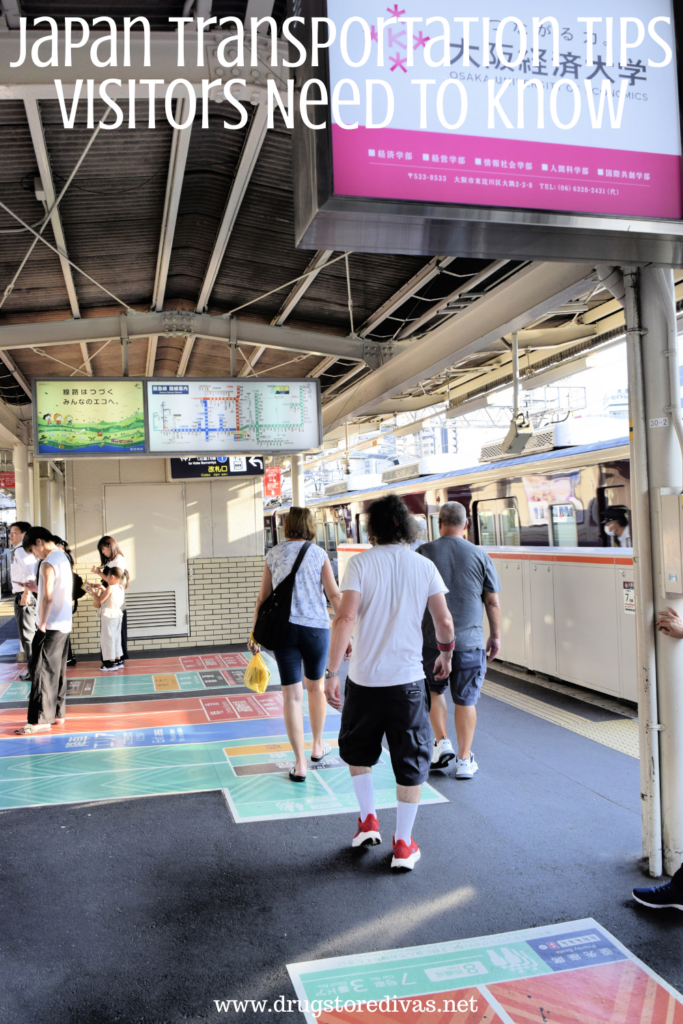
Japan has a fantastic public transportation system. The trains are always on time, it’s very easy to navigate once you get the hang of it, it’s super convenient, and it’s really affordable.
So many of Japan’s residents rely on trains and the subway, so it is a really effective system to get around.
It’s also much easier for tourists to use than Uber, which isn’t as popular in Japan as it is in America.
But don’t worry, especially if you’re used to Uber and really proud of your 5 star rating.
I don’t want you to feel intimidated and nervous about navigating Japan. I put together this post to help you understand your options and really prepare you for when you’re there.

If you’re reading this, you’re probably starting to plan your trip to Japan.
For a little more help, check out our Japan packing list. It tells you what you need to pack and what you can leave home (so you can save space in your suitcase for the souvenirs you’ll inevitably leave with).
Japan Transportation Options
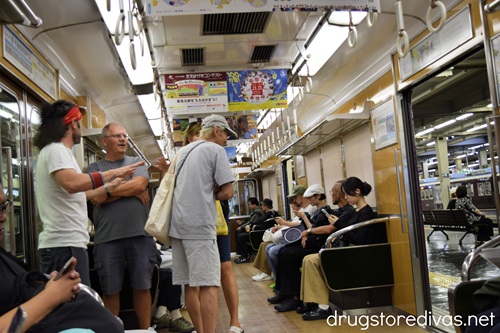
Railway & Subway Trains
You’ve probably heard of the bullet train because everyone likes talking about Japan’s high-speed railway. The Shinkansen, as it’s formally known, can cut the travel time from Tokyo to Osaka from about nine hours on the Kintetsu Railway to 2.5 hours.
But, if you’re planning shorter trips around Japan, you probably won’t take the bullet train. It’s really expensive and not always the fastest choice.
Of all the trips I’ve taken, when we’ve gone between Tokyo and Osaka, we actually just flew. Believe it or not, a plane ticket is cheaper and faster.
But, back to trains.
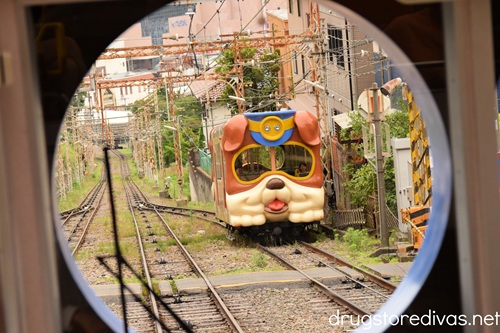
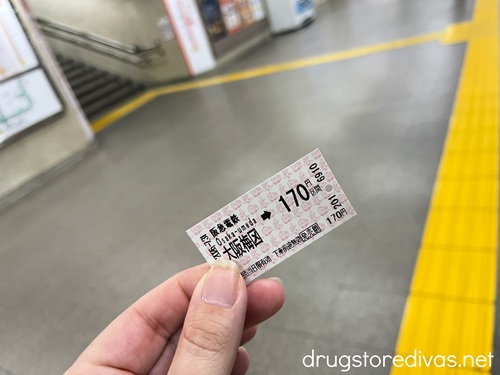
Japan has a really efficient railway system. There is a map above the ticket booth in every station. You just find where you’re going on that map and it’ll tell you the cost of the train ticket.
What we noticed on our last trip is that Apple Maps will not only give you the path you need to take, including which train lines, but it will also tell you the fare. So, you don’t even have to figure out how to read the train map. You just have to know how to read Apple Maps or Google Maps.
Apple Maps will also tell you what time the next trains are coming. Many of them are four minutes apart, so you don’t have to wait that long.
You do want to make sure that you’re taking the right train though. There is a local train, which stops at every stop, a semi-express, and an express. If you don’t need the local, don’t take it. We took it once just because it came first and it stopped at 10 more stops than the semi-express would have. So, as soon as we could, we jumped off the local and changed to the semi-express. It saved us so much time.
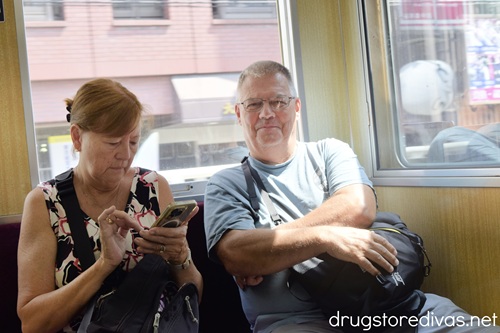
There are a couple things that you want to know about Japan’s trains before you take them. First, no one talks on them. You don’t wanna talk on your phone while you’re on the train and you also don’t want to talk to anyone you’re traveling with. If you’re watching something on your phone, make sure you’re using headphones and not playing the audio out loud.
Also, when boarding, create lines in the designated areas. Even if you’re traveling with a group, don’t bunch together. Stay in a line. And, when you’re boarding, wait for all of the passengers to exit before you enter the train.
The train will wait until everyone is on before it leaves. There’s a conductor that watches and makes sure of this. And still, even though it waits, even though the conductor gets out to make a ramp for passengers and wheelchairs, the trains are still always on time.
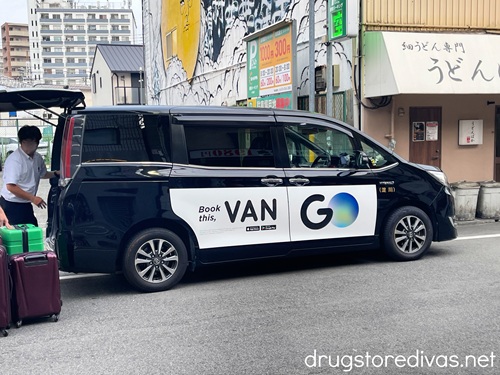
Go (Taxi App)
Instead of Uber, which isn’t as popular in Japan as it is in America, use the Go rideshare app. It’s much more expensive than using a train to get somewhere, but it is helpful sometimes.
Quick note: We used Go, but we did see DiDi available as well.
We took two trains to get from the airport to our Airbnb. It was our first train ride of the trip, and our family who lives in Japan met us at the airport and traveled with us to make it easier. By the end of the trip, we were really confident in the idea of getting from the Airbnb to the airport via train without assistance.
But, my mom didn’t want to think about carrying her heavy suitcases up stairs at the stations. There are escalators and yes, there are elevators too, but she didn’t want to deal with that. She just wanted to order a taxi.
However, my two brothers, who also needed taxis, were leaving to go to the airport at the same time as us — at 5:30 in the morning. My mom wasn’t sure if we would be able to get a third taxi at that time, especially because we needed a larger vehicle to accommodate all of our luggage, so we made a plan. We decided if we could get a taxi we would take one and if we couldn’t, we would take the train.
Well, wouldn’t you know, we were able to get three taxis. We only had to wait a few minutes between requesting the cab and when it showed up.
This was our experience. Is it always that easy? Maybe not. But it was for us.
It was the more expensive option though. It would’ve cost us 440 yen each (about $2.80) to travel via a train. For four of us, that would’ve been under $12. However, the taxi was $70.
For my mom’s peace of mind and bicep muscles, it was worth it.
Buses
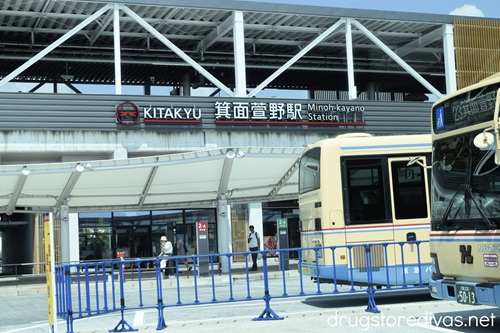
This trip, the only time we took a bus was when we were traveling from the train station to Katsuoji Temple. There’s not really another way to get from the train station to the temple unless you walk.
Although, walking isn’t really an option. The bus ride is 30 minutes up a winding mountain. Walking is very unsafe — although we did see some locals hiking it.
We took a taxi from Katsuoji to Minoh Falls and then walked to the Minoh train station. But that’s on a paved path that’s taken by many visitors daily.
Okay, I’m getting sidetracked a little. Back to the bus.
There was a huge bus station in Minoh, which was the end of the Hankyu Railway. We also saw a huge bus station in Umeda. But, other than that, we didn’t really see many buses. It’s not like the United States, which has a ton of city buses. Large cities in Japan have them, but not smaller ones.
Last time we were in Japan, we were with a group of around 30 people. And, we needed to get around when we were in the country at a ryokan. So, one of our family friends helped us rent a party bus. I’m not quite sure if you can call it a party bus because there were no neon lights or anything you’d see on an American party bus, but it was a bus that held our party.
I don’t remember the exact price, but I do remember it was reasonable because there were so many of us. So, if you’re traveling with a large group, that might be something you want to look into.


Airplanes
I know it sounds kind of silly to put airplanes on a list of transportation options, but hear me out.
Like I mentioned above, it’s cheaper to fly from Tokyo to Osaka than taking the Shinkansen. It’s quicker too. So, that’s what we do.
There’s also no direct flight that we can take from the East Coast in the US to Osaka, which is where we usually stay. So we always have to make a stop in Tokyo anyway.
If this is your first and possibly only trip to Japan, you’re probably going to want to see as much of the country as you can. So, rather than spending most of your time sitting on trains, look into flying between your destinations.
We’re planning on going back in a couple years and I would love to visit Hokkaido where my grandma was born. If we do that, we’ll definitely fly because our other option is an expensive bus ride. Since we’re only planning on going for a week, that’s just too much time to waste sitting on a bus.
Walking
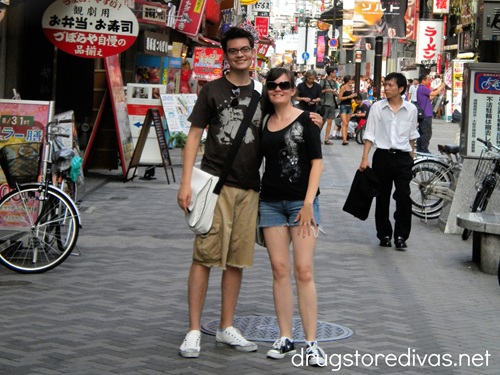
This list would be incomplete if I didn’t tell you that you’ll be walking a lot when you’re in Japan. Even if you take the JR train to see the deer in Nara, you’re still going to have to walk about 20 minutes to get to Nara Park. There is a bus over that way, but by the time you get to the bus stop, you’re at the park anyway. We averaged 16,000 to 20,000 steps every day and that’s with taking trains almost everywhere.
So, get ready to walk.
Honestly, I didn’t feel terrible or tired after walking that much. I walk about 4,000 steps on my nightly walk at home and I feel more tired at the end of that than I did any day in Japan when I’m walking four times as much. And, when I’m walking at home, I have better walking shoes.
So, don’t fear the walking. It’s inevitable, but it’s not that bad.
Which Transportation Should You Use?
Of course, you’re going to use whatever transportation makes the most sense based on where you’re staying. But, our quick suggestions:
- Going between major cities: If you’re traveling between Osaka, Tokyo, Fukuoka, or Hokkaido (or any other major city with an airport), we suggest flying. If flying isn’t an option, check the Shinkansen.
- Going between smaller cities: If you’re traveling from your hotel to another city, like from Kyoto to Dotonbori, take a railway or subway (depending on what your map app tells you).
- Getting around a city: I prefer walking around a city. This allows you to stop and sightsee.
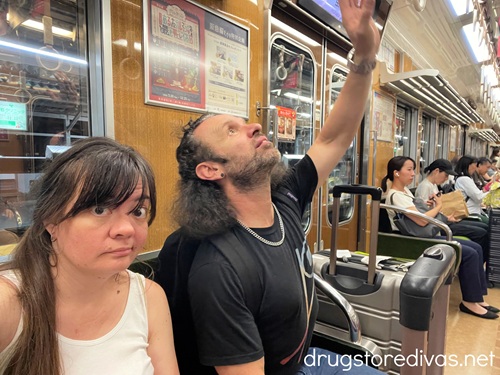
- Traveling with lots of luggage: A taxi is easiest if you have a lot of bags. Luggage is acceptable on trains and other modes of public transportation, but if you’re traveling during rush hour or a busy time, you may be taking up too much space if you have multiple bags.
Visitor Tips For Transportation In Japan
Paying For Trains/Subways
We relied on yen the entire time we were in Japan. It was so much easier for us to stay on budget. Plus, if we used our credit card, we would have paid a foreign transaction fee every time.
My cousin used her credit card the entire trip.
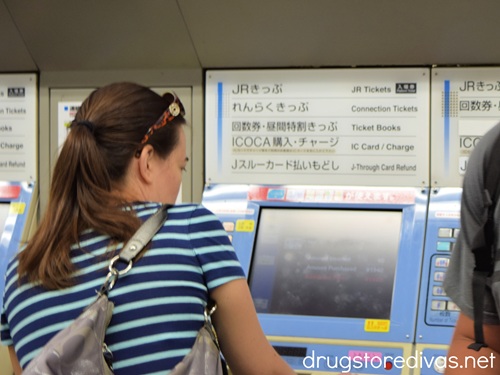
Most train stations allowed credit card use, but some of the smaller, less modern locations were cash only. So, in those instances, she couldn’t use her card and I paid for her ticket with my yen.
You can also pay with an IC card (more about that below).
For the Shinkansen, you don’t have to reserve seats, but you can buy tickets ahead of time. That’s the only way to guarantee you’ll get on the train you want. If you don’t reserve seats, you may have to wait for the next train in order to get on.
IC Cards
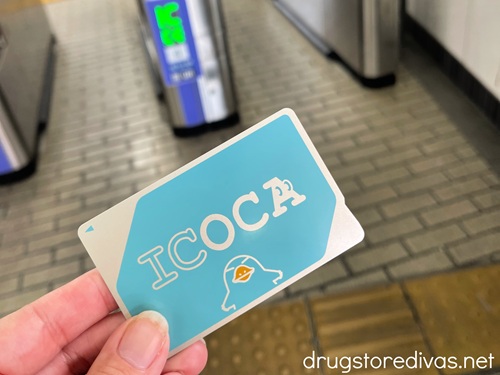
My parents used an IC card, which is similar to a metro card in that it’s a rechargeable card that you can tap at train station entrances. You can purchase the physical card at ticket machines and counters at any participating station. There’s also a Welcome Suica Mobile app for iPhones. There’s an Android app, but it’s tailored to residents and very complicated for visitors and tourists.
You can easily reload IC cards at ticket machines or convenience stores. Every time you tap the card after a train ride, your balance will be depleted automatically. That means you don’t have to figure out the fare before boarding the train like you do with a physical train ticket.
There are 10 major IC cards with different names based on the region you purchase the card. ICOCA is issued by JR West and used primarily in Osaka, Kyoto, and Western Japan. Suica is issued by JR East and used primarily in Tokyo and Eastern Japan. TOICA is issued by JR Central and used mostly around Nagoya.
Your IC card will work in any of the regions covered by the card, although it gets a little complicated because your starting and ending stations have to be located inside the IC card’s coverage area. That’s something you don’t have to worry about if you’re just buying physical train tickets.
And, not all trains are covered by IC cards, so you still may need to pay with cash or credit card at some train stations.
Also, where you purchase your cards matters. There’s a refundable deposit when you buy the card, but you can only get the refund in the region where you bought it. So keep that in mind.
Most IC cards will expire 10 years after inactivity, however, physical Welcome Suica cards expire after 28 days (digital cards last 180 days). The advantage of the Welcome Suica card, as opposed to the traditional Suica card, is that you don’t have to pay the deposit.
Japan Guide has more information about IC cards, so click that link for more comprehensive details.
Japan Rail Pass
We’ve never bought a JR Pass. It’s a discounted pass that you can use for 7, 14, or 21 consecutive days. It’s available for tourists only and gives you unlimited rides on certain trains.
If you’re only taking small regional trips, which is what we do, paying per ride is so much cheaper than paying for a JR Pass.
If you’re traveling longer distances, you might wanna do some math to figure out the best value for you.
Taxis And Payment
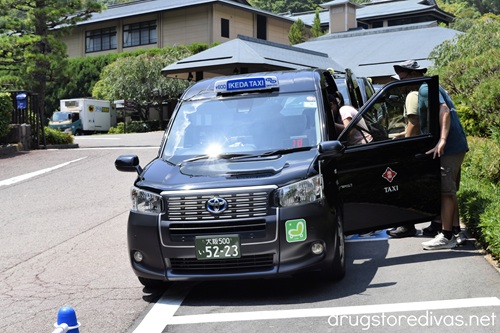
In large cities, taxi cabs can accept credit card payments. But, in rural towns, the taxi can only accept cash. And most taxi drivers don’t have large amounts of change on them.
So, if you’re planning on taking a taxi, make sure you have small bills and coins ready to pay the fare.
Also, when you’re paying, drivers don’t accept tips like they do in the states. If you try to tip, a driver may try to follow you to return your extra payment, which is slightly awkward for everyone.
Using A Map App
I prefer Apple Maps, just because I’m more comfortable with that app. My cousin used Google Maps. Both apps worked fine for directions and letting us know what mode of transportation to take, the timing of the trains, and the total costs.
The only time the fare was incorrect was when we took the train to Katsuoji. But, I think there’s a mistake somewhere because there are huge signs at the exit that say you need to head to the fare adjustment area first. Other than that time, Apple Maps and Google Maps never gave us the wrong fare.
I will recommend that you get an eSIM card before you travel so that you can use a map app on a Japanese network rather than paying a roaming or international data fee to use your US network.
Which mode of transportation did you use most when you were in Japan? Let us know in the comments.